
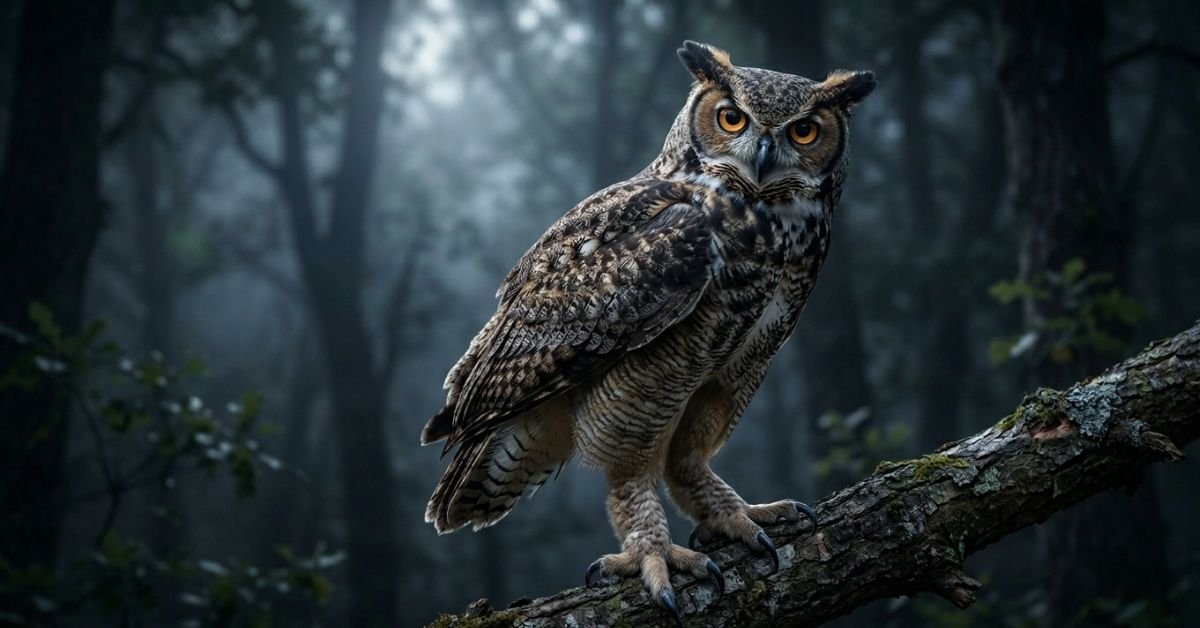
Owl getting its feathers lifted or stretching, revealing legs that look comically long compared to its fluffy body. It’s one of those “wait, what?” animal facts that stops you mid-scroll.
Owls hide their legs under thick plumage for good reasons, but when revealed, those limbs are impressively long, thin, and powerful. This isn’t a weird mutation. It’s a finely tuned evolutionary feature that helps them hunt, fly silently, perch securely, and survive in diverse habitats.
Owl Leg Anatomy: Built for Stealth and Strike
Owls belong to the order Strigiformes, with over 250 species worldwide. Their legs follow the classic bird blueprint but with specialized twists.
Bird legs have a short thigh (femur) kept close to the body for balance and flight efficiency. What we usually see as the “leg” is mostly the lower leg (tibia/fibula), ankle, and foot. This design keeps heavy muscles near the core, making flight lighter and quieter crucial for owls.
Key Features:
- Long, slender structure Helps centralize weight and reduce drag.
- Zygodactyl feet Two toes forward, two backward (reversible outer toe) for a vise-like grip on branches or prey.
- Powerful talons Sharp, curved, and strong enough to pierce and hold prey.
- Feathered or bare Depending on climate.
The thinness surprises people most. Those legs look delicate but pack serious strength for their size.
Why Owl Legs Look So Long: The Hidden Truth
The main reasons people are shocked:
- Fluffy body feathers hide most of the leg, especially in cold-climate species. Only toes often peek out.
- Short visible thighs make the lower leg appear disproportionately long.
- Stretching behavior Owls extend fully when launching, grooming, or during rehab photos.
This length serves real purposes: reaching prey hidden in grass, snow, or vegetation; maintaining balance; and creating a wider strike zone during dives.
Hunting and Survival Advantages
Long legs turn owls into effective ambush predators. They swoop silently, then stretch those limbs forward like guided missiles to snatch rodents, birds, or insects they can’t always see clearly.
- Reach Grab prey deep in cover without landing fully.
- Sensory role Feet and talons help “feel” and secure prey instantly.
- Perching power Strong grip prevents falling during sleep or wind.
- Defense Talons are formidable weapons against larger threats.
Barn owls, for example, have notably long legs for hunting in deep grass. Snowy owls feature heavily feathered legs for Arctic insulation.
Species Comparison: Not All Owl Legs Are Equal
| Species | Leg Length & Features | Habitat & Hunting Style | Notable Adaptation |
|---|---|---|---|
| Barn Owl | Very long, lightly feathered | Grasslands, fields | Reach into vegetation |
| Great Horned Owl | Strong, powerful, feathered | Forests, varied | Versatile prey handling |
| Snowy Owl | Long, thickly feathered | Arctic tundra | Cold protection + ground hunting |
| Burrowing Owl | Relatively long for ground work | Open prairies, burrows | Walking & terrestrial hunting |
| Bare-legged Owl | Bare legs (no feathers) | Tropical forests | Prevents waterlogging/heat buildup |
Longer legs generally appear in open or grassland hunters, while forest owls prioritize grip strength.
Myth vs Fact
Myth: Owl legs are fake or Photoshopped in viral photos. Fact: They’re completely real. The surprise comes from how well feathers conceal them most of the time.
Myth: Owls have unusually long legs compared to all birds. Fact: Many birds have long legs relative to body size. Owls just hide theirs better, and the contrast with their round bodies is dramatic.
Myth: Long legs make owls bad walkers. Fact: Most prefer flying, but species like Burrowing Owls walk and run effectively on the ground.
Myth: All owls have the same leg setup. Fact: Feathering, exact proportions, and talon strength vary significantly by species and environment.
EEAT Insights: From Years Observing Raptors
Having followed raptor rehabilitation and wildlife photography for years, the biggest takeaway is how perfectly owls balance form and function. The common mistake? Underestimating them based on their cute, fluffy appearance. Those “skinny” legs deliver lethal precision night after night. In 2025–2026 rehab work, we still see the same awe when handlers reveal full leg extension it never gets old, and it always reminds us how much nature optimizes for the unseen.
Statistical Context on Owls
There are roughly 250 owl species globally. Many populations face habitat pressure, but understanding their full biology (including often-overlooked legs) helps with conservation. For instance, species with specialized leg adaptations are particularly sensitive to changes in vegetation height or snow cover.
FAQs
Why do owls have such long legs?
Primarily for hunting efficiency. The length lets them reach prey in vegetation or snow, improves strike range during silent dives, and aids perching and balance. Combined with short thighs, it also supports better flight dynamics.
Are owl legs really that long, or is it an illusion?
They really are long relative to their body. Thick feathers hide them daily, so when revealed (during stretching or handling), the contrast creates the viral surprise.
Do all owl species have long legs?
Most do, but proportions vary. Grassland and open-country owls tend toward longer legs, while some tropical or forest species show different adaptations.
What are owl talons like?
Extremely sharp and powerful. Owls often kill prey by squeezing with their feet rather than just beak strikes. The grip strength is formidable for their size.
Why are some owl legs feathered and others bare?
Climate adaptation. Arctic and cold-climate owls (like Snowy) have thick feathering for insulation. Tropical or wetland species often have bare or lightly covered legs to manage heat or avoid water weight.
Can owls walk well with those legs?
They can, but most prefer short hops or flying. Burrowing Owls are an exception and are quite terrestrial.
Conclusion
Owl legs perfectly illustrate how evolution hides complexity under simplicity. Those fluffy, wide-eyed birds conceal serious predatory tools: long, strong limbs built for silent strikes, powerful grips, and survival across continents and climates.
CLICK HERE FOR MORE BLOG POSTS

Noah is a passionate content writer at Saxby, known for creating engaging and informative articles across a variety of topics. With a keen eye for detail and a reader-focused approach, he delivers high-quality content that blends clarity, research, and practical insights. Noah consistently aims to provide value-driven content that resonates with a global audience.