
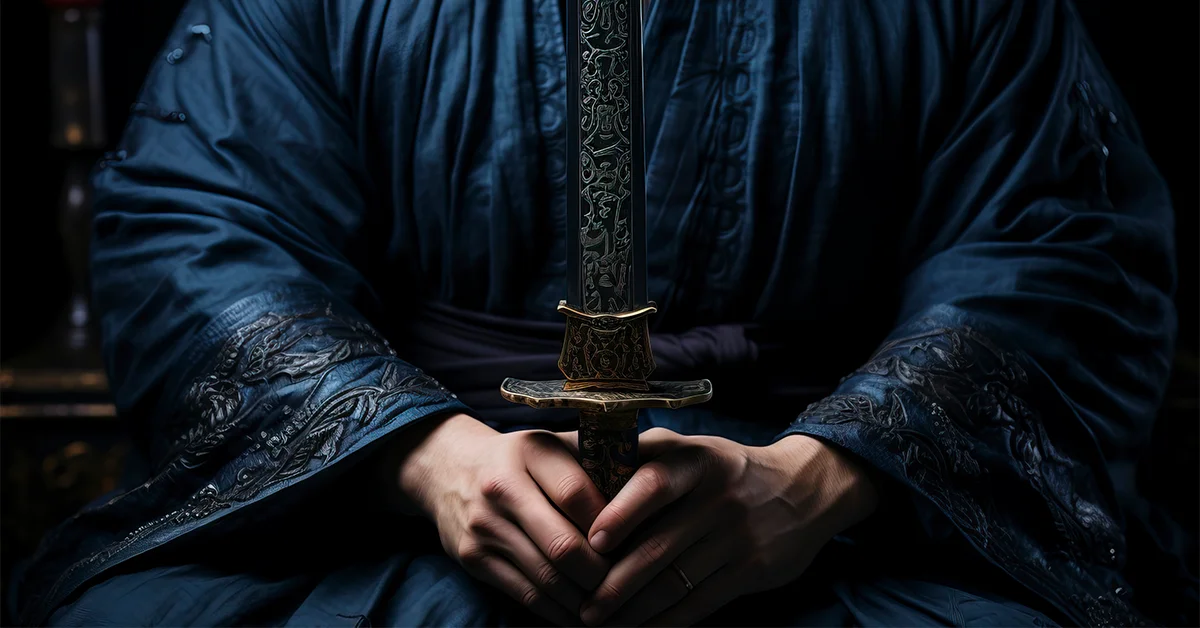
Swords have always carried a strange kind of magic in human history. They are not just weapons—they are symbols of honor, craftsmanship, and sometimes pure obsession. Among all the legendary blades ever created, few spark as much curiosity as the longest katana ever forged.
When people think of a katana, they usually imagine a sleek, curved Japanese sword designed for fast, precise combat. But what happens when that elegant design is pushed to its absolute limit—so large that it almost stops being practical and becomes a work of art instead?
That question leads us into a fascinating world of master swordsmiths, experimental creations, and ceremonial giants that blur the line between weapon and sculpture. The story behind the longest katana ever forged is not just about size—it’s about ambition, tradition, and the endless human desire to push boundaries.
ALSO READ: 10 10 Angel Number Twin Flame: A Gentle Push Toward Reunion
Understanding The Katana: More Than Just A Sword
Before diving into oversized blades, it’s important to understand what makes a katana special in the first place.
A traditional katana is a curved, single-edged Japanese sword known for its balance, sharpness, and speed. Historically, it was used by samurai and became a symbol of their identity.
Key features of a katana include:
- A curved, slender blade designed for quick slicing attacks
- A single cutting edge with a sharp, refined edge
- A long grip allowing two-handed use
- Exceptional craftsmanship using folded steel techniques
The katana was not just a weapon—it was treated as the “soul of the samurai.” Every curve and fold carried meaning and precision.
So when we talk about the longest katana ever forged, we are stepping far outside traditional limits.
Katana vs. Odachi: Where Size Begins To Change Everything
To understand extremely large katanas, we need to talk about a related weapon: the odachi (also called nodachi).
The odachi is essentially a “field sword” version of the katana, but significantly longer. While a standard katana might measure around 60–80 cm in blade length, odachi can exceed 90 cm—and in rare cases, go far beyond that.
However, once a sword becomes too large to be drawn from the waist or used in normal combat, it stops being practical and starts becoming ceremonial or symbolic.
This is where the concept of the longest katana ever forged becomes more of a legend and engineering marvel than a battlefield tool.
The Fascination With Oversized Blades
Why would anyone forge a sword so large it’s nearly impossible to use?
The answer lies in three human motivations:
Symbolism
Large swords often represented power, wealth, or divine favor. A massive blade wasn’t meant for war—it was meant to impress.
Ceremony
Some oversized swords were created for shrines or festivals. They were carried by multiple people or displayed as sacred objects.
Craftsmanship Challenge
For master swordsmiths, creating an oversized katana is like an artist painting on a giant canvas—it tests their limits.
This is why stories of the longest katana ever forged continue to capture attention even today.
The Story Behind The Longest Katana Ever Forged
While there is no single universally agreed “official record” for the longest katana in history, several legendary blades stand out in discussions among historians and sword enthusiasts.
Some of the most famous oversized Japanese swords were created in Japan’s feudal era or as modern ceremonial pieces inspired by tradition.
One of the most commonly referenced examples is a massive ceremonial sword often associated with shrine offerings and festival displays. These blades can reach lengths of several meters and require multiple people to carry or even display.
Unlike traditional katana meant for combat, these giant swords were forged with a completely different purpose:
- To honor deities in Shinto shrines
- To demonstrate the skill of master craftsmen
- To symbolize unity, strength, or protection
In many cases, these swords were never intended to be used in battle at all. Instead, they became cultural icons.
Crafting A Giant Katana: A Feat Of Engineering
Forging a normal katana is already an incredibly complex process. Creating an extremely large version pushes everything to the edge of possibility.
The Steel Problem
Traditional katana-making involves folding steel multiple times to remove impurities and strengthen the blade. When scaling up the size, controlling the heat and consistency becomes much more difficult.
Weight and Balance
A normal katana is carefully balanced so it can be wielded with speed. A giant version can weigh dozens of kilograms, making balance irrelevant in practical terms—but still critical for structural integrity.
Forging Limitations
Standard forging tools are not designed for massive blades. Special furnaces, oversized anvils, and custom handling methods must be used.
Assembly Challenges
In many modern oversized katana projects, sections may be assembled rather than forged as a single continuous blade due to technical limitations.
This is why the longest katana ever forged is often more of an engineering project than a traditional sword-making process.
Famous Giant Katanas In History And Modern Times
Over the years, several impressive oversized Japanese swords have gained attention. While not all are true combat weapons, they showcase the extremes of craftsmanship.
Some notable examples include:
Shrine Ceremonial Swords
Certain Japanese shrines display enormous swords used in festivals or rituals. These swords are often carried by groups of people and used in symbolic ceremonies.
Modern Record-Setting Swords
In recent times, artisans and enthusiasts have created giant katana-style swords to set records or demonstrate skill. These are often displayed in museums or exhibitions.
Replica Odachi Creations
Some modern swordsmiths recreate historical odachi designs at extreme scales, sometimes pushing lengths far beyond what was ever practical in feudal Japan.
Each of these contributes to the ongoing fascination with the idea of the longest katana ever forged.
Was The Longest Katana Ever Actually Used In Battle?
This is one of the most common questions—and the answer is simple: almost certainly not.
A sword of extreme size would be impractical in combat for several reasons:
- Too heavy to wield effectively
- Too large for close-quarters fighting
- Too slow compared to standard weapons
- Requires multiple people to handle
Instead, these swords served symbolic or ceremonial purposes. They represented power rather than function.
So while the idea of a giant samurai blade slicing through battlefields sounds exciting, history tells a different story.
The Symbolism Behind Oversized Katanas
Even though they were not practical weapons, giant katanas carry deep meaning.
Strength and Authority
A massive sword symbolizes dominance and authority, often associated with rulers or temples.
Spiritual Protection
In Shinto tradition, large swords were sometimes seen as protectors against evil spirits.
Human Achievement
Perhaps most importantly, they represent what humans can achieve when skill and ambition combine.
The longest katana ever forged is less about combat and more about storytelling through steel.
Why The Longest Katana Still Fascinates Us Today
Even in a modern world filled with advanced technology, people are still fascinated by giant swords. Why?
Because they represent something timeless:
- The beauty of handmade craftsmanship
- The mystery of ancient traditions
- The limits of human creativity
- The blending of art and engineering
Whether displayed in a museum or recreated in modern workshops, these swords continue to inspire awe.
The idea of the longest katana ever forged is not just about size—it’s about imagination.
Modern Interpretations And Cultural Impact
Today, oversized katanas often appear in:
- Anime and video games
- Martial arts exhibitions
- Cultural festivals
- Museum displays
Pop culture has also amplified the idea of massive swords, often exaggerating their size for dramatic effect. While fictional characters may wield enormous blades effortlessly, real-world physics tells a different story.
Still, these artistic interpretations keep the legend alive and introduce new generations to traditional Japanese sword culture.
The Legacy Of Giant Katanas
The legacy of the longest katana ever forged is not measured in combat effectiveness or historical battles. Instead, it lives on through:
- Traditional craftsmanship
- Cultural symbolism
- Artistic experimentation
- Global fascination with samurai heritage
Each oversized blade tells a story—not of war, but of human ambition and creativity pushed beyond ordinary limits.
Conclusion
The story behind the longest katana ever forged is not a straightforward tale of one specific weapon, but rather a collection of extraordinary creations that challenge our understanding of what a sword can be.
From ceremonial shrine swords to modern record-breaking replicas, these massive blades are less about function and more about meaning. They reflect centuries of tradition, craftsmanship, and cultural symbolism.
In the end, the longest katana ever forged is not just a piece of steel—it is a reminder that human creativity has no fixed size limit.
FAQs
What is the longest katana ever forged?
The longest katana ever forged is not officially defined as a single weapon. However, several oversized ceremonial and replica swords exist that stretch several meters in length, far beyond traditional katana size.
Were giant katanas used in real battles?
No, extremely large katanas were not practical for combat. They were mainly used for ceremonial, symbolic, or display purposes.
How is a katana normally made?
A traditional katana is made by folding and forging high-carbon steel multiple times, then carefully shaping and tempering it to create a strong and sharp blade.
Why were oversized katanas created?
They were created to symbolize power, demonstrate craftsmanship, serve religious purposes, or showcase artistic and engineering skill.
Can a katana be made longer and still be usable?
Yes, but only up to a point. Once a sword becomes too long and heavy, it transitions from a functional weapon into a ceremonial or decorative object.
ALSO READ: Understanding The Core Qualities Of A Good Man

Daniel Harper is a skilled content writer specializing in technology and digital trends. At Saxby.org, he creates clear, well-researched, and trustworthy articles that help readers stay informed and make better decisions.