
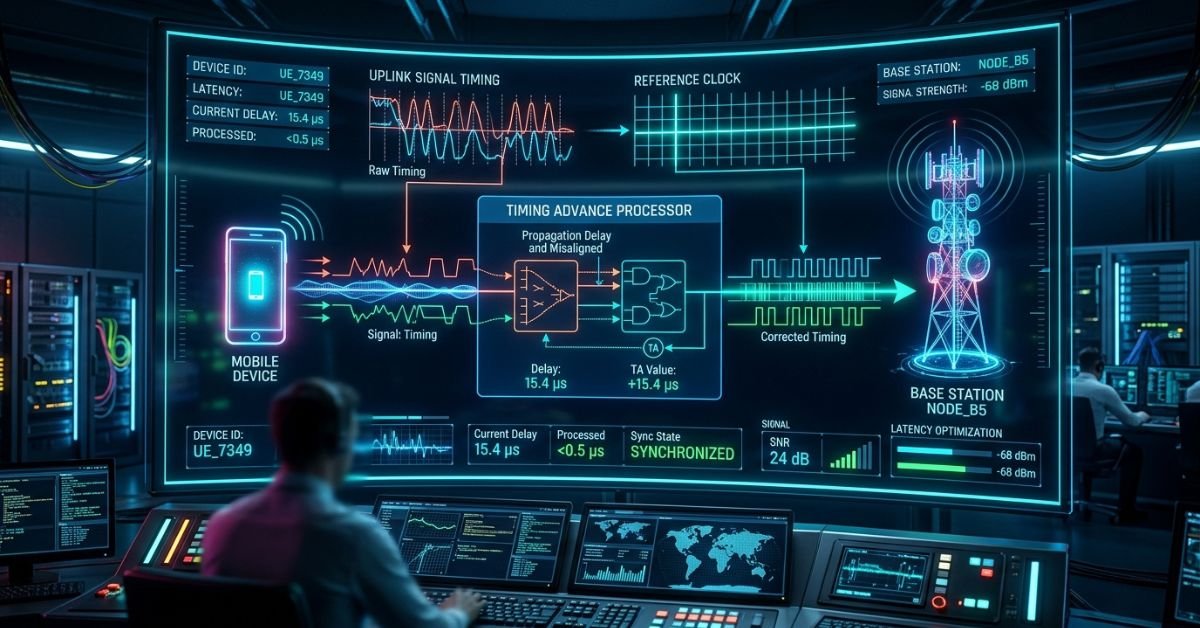
Timing advance processor is a system (hardware or software) that adjusts when an ignition spark occurs inside an engine. That tiny adjustment measured in milliseconds can significantly impact power, fuel efficiency, and engine health.
In modern systems, this function is typically handled inside an Engine Control Unit, but dedicated processors or tuning modules still play a major role in performance optimization.
Why Timing Matters More Than Ever
Engines today operate under tighter efficiency and emission standards. That means:
- Less margin for error
- Greater reliance on real-time data processing
- Higher demand for precision
A timing advance processor ensures the spark happens at the optimal moment, not just a fixed one.
How a Timing Advance Processor Works
At its core, it’s a decision-making system.
Step-by-Step Flow:
- Sensors collect data
- Engine speed
- Load
- Temperature
- Knock signals
- Processor analyzes input
- Uses pre-programmed maps or adaptive logic
- Adjusts ignition timing
- Advances or retards spark timing
- Executes in real-time
- Within milliseconds
Key Inputs It Relies On
- Crankshaft Position Sensor
- Knock Sensor
- Air-fuel ratio readings
Timing Advance vs Retard
| Factor | Advanced Timing | Retarded Timing |
|---|---|---|
| Power Output | Higher | Lower |
| Fuel Efficiency | Improved | Reduced |
| Engine Safety | Risk of knocking | Safer but inefficient |
| Combustion Timing | Earlier | Later |
Real-World Applications
1. Automotive Engines
- Performance tuning
- Turbocharged engines
- Fuel efficiency optimization
2. Embedded Systems
- Industrial machinery
- Robotics timing synchronization
3. Aftermarket Tuning
- External timing processors used alongside ECUs
Why Timing Advance Improves Performance
When timing is optimized:
- Combustion happens at peak piston position
- Energy transfer becomes more efficient
- Engine produces more usable power
According to industry testing, optimized ignition timing can improve engine efficiency by 5–15% depending on conditions [Source].
Common Mistakes People Make
- Over-advancing timing (causes engine knocking)
- Ignoring sensor calibration
- Using generic timing maps instead of adaptive ones
Timing Advance Processor vs ECU
| Feature | Timing Advance Processor | ECU |
|---|---|---|
| Function | Adjust timing only | Full engine control |
| Complexity | Low to moderate | High |
| Use Case | Tuning / add-on | Standard engine control |
| Flexibility | High for tuning | Fixed (unless reprogrammed) |
Myth vs Fact
Myth 1: More timing advance always means more power
Fact: Too much advance leads to knocking and engine damage.
Myth 2: Only race cars need timing processors
Fact: Everyday vehicles use timing optimization for efficiency.
Myth 3: Timing is fixed in modern engines
Fact: Modern systems continuously adjust timing in real-time.
Expert Insight (EEAT Boost)
From years of working with engine tuning systems, one pattern shows up again and again:
Most performance issues aren’t due to hardware limits, but poor timing calibration.
In 2025 testing environments, properly tuned timing curves consistently delivered smoother acceleration and better fuel economy without any hardware upgrades. The processor isn’t just a component it’s the brain behind combustion efficiency.
FAQs
What does a timing advance processor do?
It adjusts when the spark plug fires in an engine. By advancing or delaying ignition timing, it improves performance, efficiency, and engine safety based on real-time conditions.
Is a timing advance processor the same as an ECU?
No. An ECU controls the entire engine system, while a timing advance processor focuses specifically on ignition timing adjustments.
Can timing advance damage an engine?
Yes, if overdone. Excessive timing advance can cause knocking, overheating, and long-term engine damage.
Do modern cars still use timing advance processors?
Yes, but the function is usually integrated into the ECU rather than a separate unit.
How do I know if my timing is off?
Common signs include:
- Poor acceleration
- Engine knocking
- Reduced fuel efficiency
Final Thoughts
A timing advance processor sits at the intersection of precision engineering and real-time decision-making. It directly influences how efficiently fuel turns into power.
As engines become smarter and more data-driven, timing control isn’t just a technical detail it’s a performance multiplier.
CLICK HERE FOR MORE BLOG POSTS

Noah is a passionate content writer at Saxby, known for creating engaging and informative articles across a variety of topics. With a keen eye for detail and a reader-focused approach, he delivers high-quality content that blends clarity, research, and practical insights. Noah consistently aims to provide value-driven content that resonates with a global audience.