
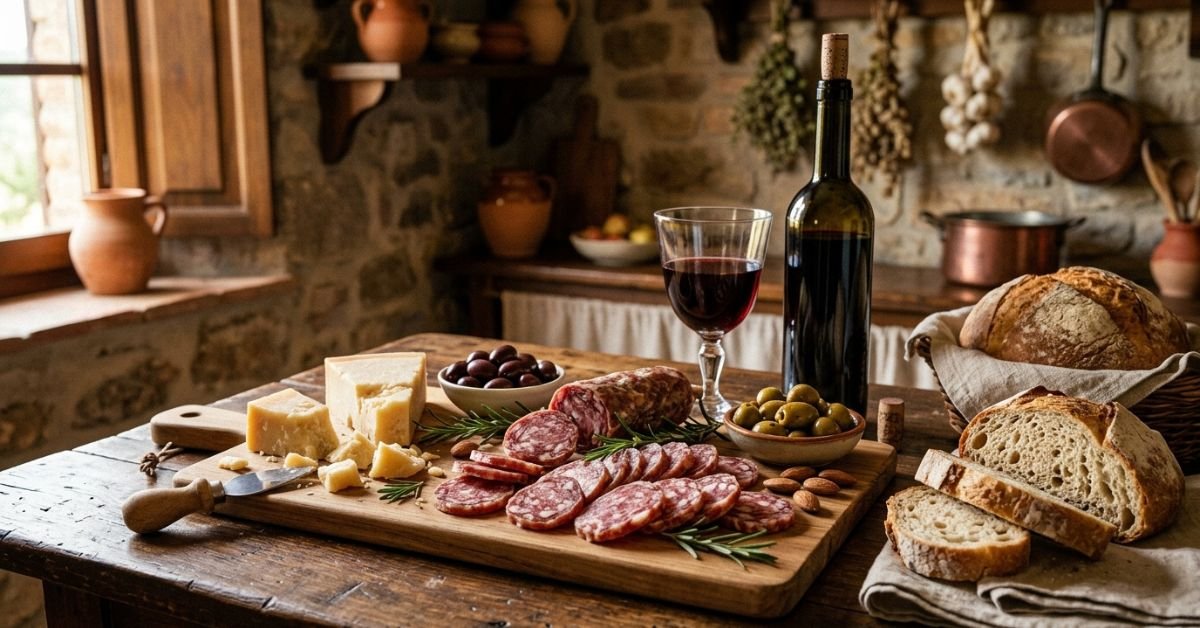
Soppressata is a dry-cured pork salume (cured meat) traditionally made by pressing the sausage during curing, which gives it a distinctive flattened or oblong shape. The name comes from the Italian word for “pressed.” It features coarsely ground or hand-cut lean pork, often with visible fat chunks, seasoned with salt, black pepper, garlic, and sometimes wine or chili.
Unlike finely ground commercial salami, traditional soppressata has a more rustic, sausage-like texture with larger pieces of meat and fat. Southern Italian versions tend to be bolder and can be quite spicy.
Origins and Regional Traditions
Soppressata traces its roots to southern Italy, particularly Calabria, Basilicata, Puglia, and Campania. These regions developed preservation techniques centuries ago to make the most of pork during winter slaughters.
- Soppressata di Calabria holds PDO (Protected Designation of Origin) status, with strict rules on ingredients and production. Pigs must meet specific breed and rearing standards.
- Soppressata di Basilicata is another prized variety, often produced in towns like Rivello and Vaglio.
- Northern styles, like Sopressa Veneta, exist and are generally milder and larger.
The pressing method not only shapes the product but helps expel moisture for better preservation and a denser texture.
How Soppressata Is Made
Artisan production follows time-honored steps:
- High-quality pork (lean cuts like shoulder and ham) is coarsely chopped or ground.
- Seasoned with salt, pepper, garlic, and regional spices (fennel, chili for Calabrian styles).
- Stuffed into natural casings.
- Fermented and then pressed between boards or in molds.
- Slowly air-dried and cured for weeks to months.
The result is a firm, sliceable salume with complex umami and balanced fat.
Soppressata vs. Salami: Key Differences
| Feature | Soppressata | Traditional Salami |
|---|---|---|
| Meat Cut | Leaner cuts, coarsely chopped | Finer grind, higher fat content |
| Texture | Rustic, visible chunks, firmer | Smoother, more uniform |
| Shape | Often flattened/pressed | Cylindrical |
| Flavor Profile | Bold, garlicky, can be spicy | Varies widely, often milder |
| Curing Process | Pressed during curing | Hung without heavy pressing |
| Common Regions | Southern Italy | Widespread across Italy |
Soppressata generally feels less chewy and more “meaty” because of the leaner composition and pressing.
Popular Varieties
- Mild (Dolce): Black pepper and garlic forward, balanced.
- Hot (Piccante): Loaded with Calabrian chili flakes — a favorite for those who like heat.
- Tuscan-style: Sometimes includes different spices or wine.
- Domestic/American versions: Often milder to suit broader palates but still excellent on boards.
Nutrition and Storage
A typical 1 oz (28g) serving contains roughly 80-100 calories, high in protein (6-8g), and fat, with zero carbs. It’s nutrient-dense but best enjoyed in moderation due to sodium content.
Storage tips: Keep whole pieces in a cool, dark place or refrigerator. Once sliced, wrap tightly and use within a week. For longer storage, vacuum-seal or freeze.
How to Serve and Pair Soppressata
Soppressata shines on charcuterie boards with cheeses (pecorino, provolone), olives, roasted peppers, and crusty bread. It works well in sandwiches, chopped into pasta dishes, or even on pizza.
Wine pairings: Full-bodied reds like Aglianico, Nero d’Avola, or Chianti Classico cut through the richness. For spicy versions, try something with a bit of sweetness or high acidity.
Quick ideas:
- Antipasto platter with fresh mozzarella and basil.
- Soppressata and egg breakfast sandwiches.
- Chopped into ragù or white bean soups for depth.
Myth vs. Fact
Myth: All soppressata is super spicy. Fact: Many versions are mild; heat level depends on the region and producer.
Myth: It’s the same as salami. Fact: Distinct in texture, fat content, and pressing method.
Myth: It has to be imported to be authentic. Fact: Excellent U.S. artisans now produce high-quality versions following traditional methods.
Myth: The pressing is just for looks. Fact: It aids preservation by removing moisture and creates the characteristic dense texture.
EEAT Insight: From Years Around Italian Charcuterie
Having spent time with producers and importers over the years, the biggest difference I notice is between mass-produced and traditional soppressata. The real stuff whether from Calabria or a skilled American salumiere has that irregular grain and deep seasoning you can’t fake with shortcuts. Common mistake: buying the cheapest option. Spend a bit more for proper curing and you’ll taste the difference immediately.
FAQs
What does soppressata taste like?
It delivers a robust, savory pork flavor with garlic, black pepper, and often a pleasant spice. The coarse texture makes each bite interesting leaner and meatier than many salamis.
Is soppressata the same as salami?
No. While both are dry-cured pork products, soppressata uses leaner meat, coarser grind, and is pressed, resulting in a different shape and mouthfeel.
How long does soppressata last?
Whole, sealed pieces can last months in the fridge or cool storage. Once sliced, consume within 5-7 days for best quality.
Is soppressata spicy?
It can be. Calabrian-style is often hot thanks to local chilies, but mild versions are widely available.
Can you cook with soppressata?
Yes. It adds great flavor when diced into pasta, frittatas, or soups, though it’s most commonly eaten uncooked.
Where to buy good soppressata?
Look for Italian delis, specialty markets, or trusted online sources. Check for PDO seals on authentic Calabrian versions.
Conclusion
Soppressata represents the best of Italian salumi tradition simple ingredients, time-honored technique, and powerful regional flavor. From its southern Italian roots to modern artisan versions, it remains a standout for anyone who loves bold cured meats.
CLICK HERE FOR MORE BLOG POSTS

Noah is a passionate content writer at Saxby, known for creating engaging and informative articles across a variety of topics. With a keen eye for detail and a reader-focused approach, he delivers high-quality content that blends clarity, research, and practical insights. Noah consistently aims to provide value-driven content that resonates with a global audience.