
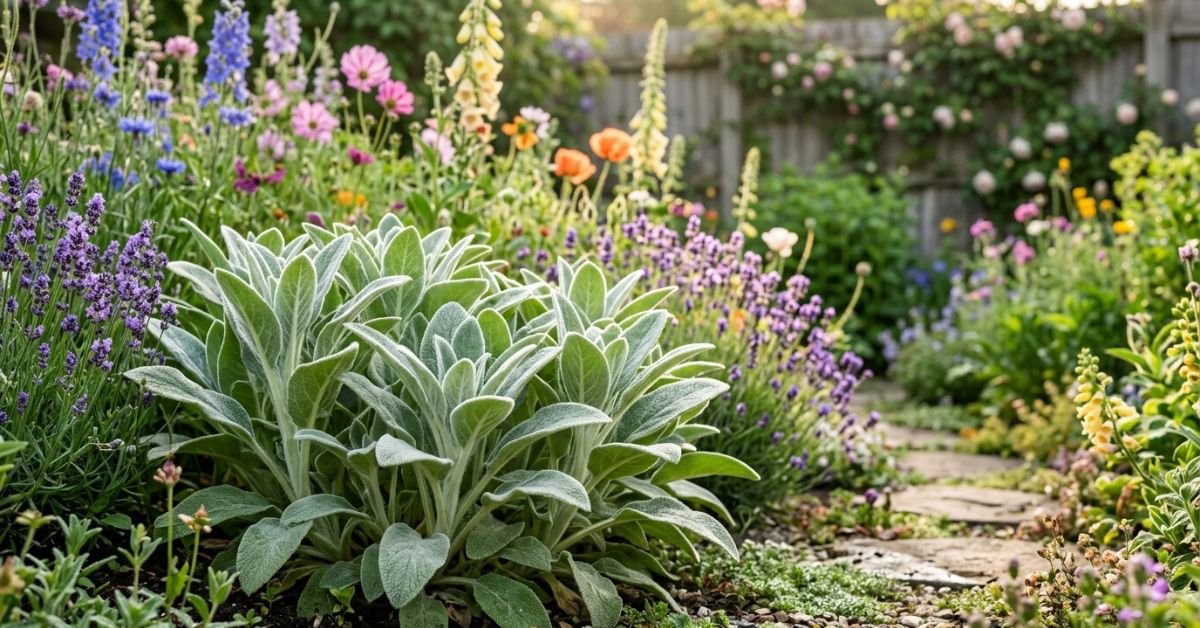
Few garden plants create instant visual impact quite like the Lamb’s Ear plant. With its velvety silver leaves and remarkably low-maintenance nature, this perennial has become a favorite among homeowners, landscape designers, and drought-conscious gardeners.
Known botanically as Stachys byzantina, Lamb’s Ear is prized for its soft texture, ability to thrive in difficult conditions, and versatility in garden design. Whether you’re building a cottage garden, creating a water-wise landscape, or simply searching for a beautiful ground cover, this plant deserves a closer look.
What Is a Lamb’s Ear Plant?
Lamb’s Ear (Stachys byzantina) is a herbaceous perennial native to parts of the Middle East and Central Asia.
Its name comes from the thick, fuzzy leaves that resemble the ears of a young lamb.
Key Characteristics
| Feature | Details |
|---|---|
| Botanical Name | Stachys byzantina |
| Plant Type | Perennial |
| Mature Height | 6–18 inches |
| Mature Spread | 12–36 inches |
| Sun Exposure | Full Sun to Partial Shade |
| Soil Type | Well-drained soil |
| USDA Zones | 4–9 |
| Bloom Time | Late Spring to Summer |
| Flower Color | Purple-Pink |
| Water Needs | Low |
The foliage often remains attractive long after flowering, making it valuable as a year-round ornamental plant.
Why Gardeners Love Lamb’s Ear
The popularity of Lamb’s Ear extends beyond its appearance.
Benefits Include
- Extremely drought tolerant once established
- Deer resistant
- Rabbit resistant
- Easy to grow
- Excellent ground cover
- Soft tactile foliage children enjoy touching
- Works in rock gardens and borders
- Helps suppress weeds
- Attracts bees and pollinators during bloom
Its silvery leaves also create contrast against green foliage, making nearby plants stand out.
How to Grow Lamb’s Ear Successfully
Sunlight Requirements
Lamb’s Ear performs best in:
- Full sun (6+ hours daily)
- Partial shade in hot climates
In humid regions, greater sun exposure improves air circulation and reduces disease issues.
Soil Requirements
The most important factor is drainage.
Ideal soil conditions include:
- Sandy soil
- Loamy soil
- Gravelly soil
- Slightly alkaline to neutral pH
Avoid heavy clay soils that remain wet for extended periods.
Watering Needs
One of the biggest mistakes gardeners make is overwatering.
Watering Guidelines
New Plants
- Water regularly during establishment
Established Plants
- Water only during prolonged droughts
- Allow soil to dry between watering
Excess moisture often causes more problems than drought.
Does Lamb’s Ear Spread?
Yes.
Lamb’s Ear slowly spreads through underground stems and forms dense mats.
Typical Growth Rate
- Moderate spreader
- Expands outward annually
- Easily controlled through division
Because it forms a thick carpet, it is often used as a living mulch between larger ornamental plants.
Best Companion Plants for Lamb’s Ear
The silver foliage pairs beautifully with colorful flowering perennials.
Top Companion Plants
- Lavender
- Salvia
- Yarrow
- Coneflower
- Russian Sage
- Sedum
- Black-Eyed Susan
- Artemisia
These plants share similar sunlight and water requirements, making maintenance simple.
Landscaping Uses
Cottage Gardens
Lamb’s Ear fits naturally into informal garden designs.
Border Plantings
Creates a soft edge along pathways and flower beds.
Rock Gardens
Thrives in dry, rocky locations.
Xeriscape Landscapes
Excellent for water-efficient gardens.
Pollinator Gardens
Flower spikes attract bees and beneficial insects.
Common Problems and Solutions
Although generally trouble-free, Lamb’s Ear can experience issues.
Crown Rot
Cause:
Excess moisture around the crown.
Solution:
- Improve drainage
- Reduce watering
- Thin overcrowded plants
Powdery Mildew
Cause:
Poor air circulation.
Solution:
- Increase spacing
- Remove affected foliage
- Avoid overhead watering
Leaf Decay
Often occurs during long periods of humidity.
Regular cleanup helps keep plants healthy.
Lamb’s Ear Plant Care Throughout the Year
Spring
- Remove damaged winter foliage
- Divide crowded plants
- Apply compost if needed
Summer
- Deadhead flowers if desired
- Monitor moisture levels
Fall
- Remove diseased leaves
- Improve air circulation
Winter
- Minimal care required
- Avoid overly wet conditions
Lamb’s Ear vs Other Silver-Foliage Plants
| Plant | Texture | Drought Tolerance | Flowering | Maintenance |
|---|---|---|---|---|
| Lamb’s Ear | Very Soft | Excellent | Moderate | Low |
| Dusty Miller | Soft | Excellent | Limited | Low |
| Artemisia | Fine Texture | Excellent | Minimal | Very Low |
| Russian Sage | Coarse | Excellent | Heavy Blooms | Low |
For tactile appeal and ground cover performance, Lamb’s Ear remains difficult to beat.
Myth vs Fact
Myth:
Lamb’s Ear requires constant watering.
Fact:
Once established, it thrives in relatively dry conditions.
Myth:
It only grows in cool climates.
Fact:
Many varieties perform well in USDA Zones 4–9.
Myth:
The flowers are the main attraction.
Fact:
Most gardeners grow Lamb’s Ear primarily for its foliage.
Myth:
It’s invasive.
Fact:
It spreads steadily but is easy to control.
Statistics & Gardening Trends
Recent landscaping trends continue to favor drought-tolerant and low-water plants.
According to water-wise landscaping initiatives across North America, replacing thirsty ornamental plants with drought-resistant species can significantly reduce outdoor water consumption. Lamb’s Ear consistently appears among recommended xeriscape perennials. [Source: Xerces Society, EPA WaterSense]
Growing interest in pollinator gardens has also increased demand for flowering perennials that support beneficial insects while requiring minimal maintenance. [Source: National Wildlife Federation]
Expert Insight: What Experienced Gardeners Notice
From years of maintaining perennial landscapes, one pattern appears repeatedly: Lamb’s Ear struggles far more from too much attention than too little.
Many gardeners instinctively water, fertilize, and pamper the plant. Ironically, Lamb’s Ear performs best when allowed to grow in lean, well-drained soil with moderate neglect.
The healthiest specimens are usually found in sunny locations with excellent airflow and minimal supplemental watering.
How to Propagate Lamb’s Ear
The easiest method is division.
Steps
- Dig up an established clump in spring.
- Separate healthy sections.
- Replant immediately.
- Water lightly until roots establish.
Division every few years also helps rejuvenate older plants.
FAQ
Is Lamb’s Ear a perennial or annual?
Lamb’s Ear is a perennial in USDA Hardiness Zones 4–9. It returns every year and typically becomes larger over time through gradual spreading.
Does Lamb’s Ear need full sun?
Full sun is ideal in most climates. In very hot regions, partial afternoon shade can help reduce stress while maintaining healthy foliage.
Is Lamb’s Ear invasive?
No. While it spreads steadily, it does not aggressively overtake landscapes and can be managed easily through division and trimming.
How often should I water Lamb’s Ear?
Water regularly only while the plant is establishing roots. Mature plants generally need little supplemental irrigation except during prolonged drought.
Why is my Lamb’s Ear turning brown?
Brown leaves are usually caused by excess moisture, poor drainage, humidity, or crown rot. Improving airflow and reducing watering often solves the problem.
Do deer eat Lamb’s Ear?
Deer usually avoid Lamb’s Ear because of its fuzzy, textured foliage. It is widely considered one of the more reliable deer-resistant perennials.
CONCLUSION
Lamb’s Ear (Stachys byzantina) remains one of the most versatile perennials available to modern gardeners. Its silvery foliage, drought tolerance, deer resistance, and ability to function as a beautiful ground cover make it valuable in cottage gardens, pollinator landscapes, rock gardens, and xeriscape designs.
As climate-conscious gardening continues to grow in popularity, plants that deliver beauty while requiring fewer resources will become even more important. Lamb’s Ear is already proving why it belongs in that future.
CLICK HERE FOR MORE BLOG POSTS

Noah is a passionate content writer at Saxby, known for creating engaging and informative articles across a variety of topics. With a keen eye for detail and a reader-focused approach, he delivers high-quality content that blends clarity, research, and practical insights. Noah consistently aims to provide value-driven content that resonates with a global audience.