Afternoon tea traces back to the 1840s and Anna, the Duchess of Bedford. She experienced a “sinking feeling” in the long stretch between lunch and dinner (often served at 8 p.m.), so she requested tea and light refreshments around 4 p.m. What started as a personal fix quickly became a social ritual among the upper class, spreading through society.
Queen Victoria helped popularize it further, and it evolved into a symbol of British refinement. Today, it’s enjoyed worldwide not just by royalty but as an accessible indulgence or special occasion.
Key Entities and Concepts:
- Duchess of Bedford and Victorian origins
- Loose leaf teas (Earl Grey, Darjeeling, Assam)
- Tiered stands, finger sandwiches, scones with clotted cream
- Etiquette rules and proper service
- Venues like The Ritz London or Bettys Tea Rooms
Afternoon Tea vs High Tea: Clearing Up the Confusion
This mix-up trips up many people.
| Aspect | Afternoon Tea | High Tea |
|---|---|---|
| Time | 3–5 p.m. (light snack) | 5–7 p.m. (hearty meal) |
| Setting | Low tables, elegant parlor | High dining table, more casual |
| Food | Finger sandwiches, scones, cakes | Meats, pies, cheeses, heartier fare |
| Purpose | Social, bridging meals | Working-class evening supper |
| Vibe | Refined and leisurely | Practical and filling |
Afternoon tea is the dainty, social one most people picture. High tea was never the fancy version it’s the opposite.
Essential Elements: Building the Perfect Spread
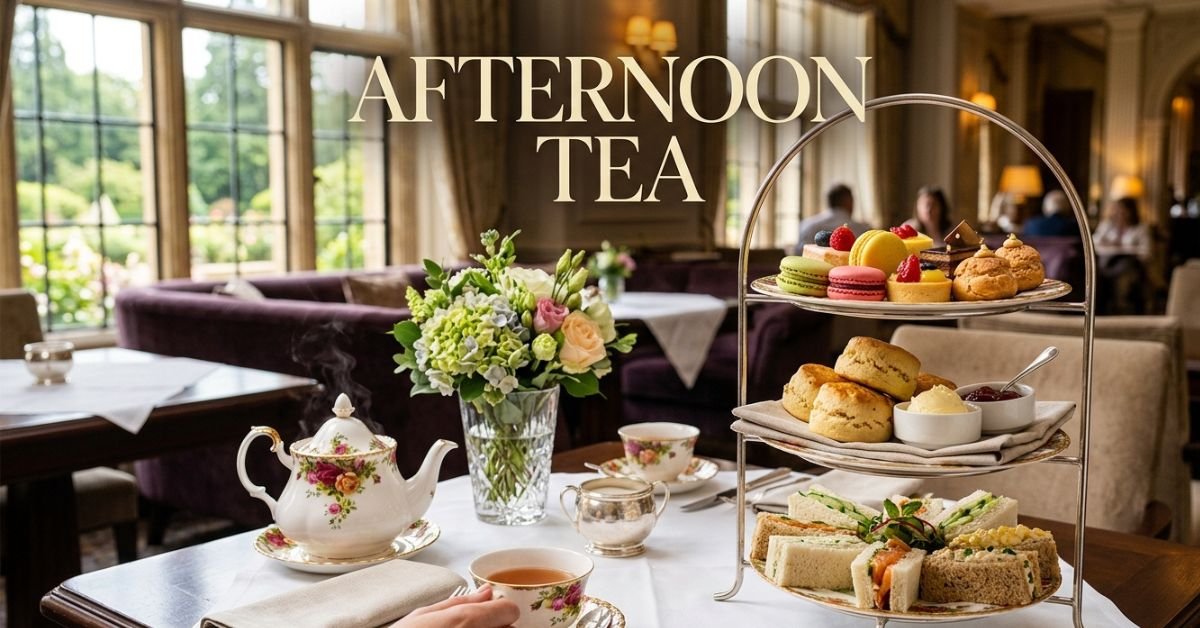
A traditional afternoon tea features three courses on a tiered stand (savory bottom, scones middle, sweets top):
- Tea Selection: Start with black teas. Offer varieties like English Breakfast, Earl Grey, or herbal options.
- Savories: Crustless finger sandwiches (cucumber, egg salad, smoked salmon, ham & mustard).
- Scones: Warm, with clotted cream and jam (Devon or Cornish style debate the order!).
- Sweets: Mini cakes, Victoria sponge, macarons, tarts, or shortbread.
Pro Tip: Everything should be bite-sized for easy handling.
How to Host Afternoon Tea at Home (Step-by-Step)
- Set the Scene: Use a tablecloth, fresh flowers, and your best china. Tiered stands add authenticity.
- Brew Properly: Loose leaf, one teaspoon per person plus one for the pot. Steep 3–5 minutes.
- Menu Planning: Balance flavors savory, buttery, sweet. Prep sandwiches ahead but assemble last.
- Service Order: Tea first, then eat bottom to top on the stand. Finish one course before the next.
- Ambiance: Soft music, good conversation. No phones at the table.
Simple Scone Recipe (Makes 8-10):
- 2 cups self-raising flour, 1 tsp baking powder, pinch salt, 2 oz cold butter, ¾ cup milk (or buttermilk).
- Cut butter into flour, add milk, knead lightly, cut rounds. Bake at 425°F for 10-12 minutes until golden.
Serve warm with clotted cream and strawberry jam.
Afternoon Tea Etiquette: Do’s and Don’ts
Etiquette enhances the experience without being stuffy.
Do:
- Hold the teacup with thumb and index finger through the handle, pinky down.
- Stir gently in a back-and-forth motion (no clinking).
- Eat sandwiches and scones with fingers; use a fork for messier cakes.
- Take small bites and finish one item before another.
Don’t:
- Extend your pinky (it’s outdated).
- Slurp or blow on hot tea.
- Put milk in first (tea first is traditional, though debated).
- Reach across the table ask for items to be passed.
Myth vs Fact
- Myth: You must dress formally or go to a fancy hotel. Fact: At home, smart casual works perfectly. It’s about the ritual, not the price tag.
- Myth: High tea is just a fancier name for afternoon tea. Fact: They’re completely different meals rooted in class and timing.
- Myth: Scones require fancy techniques. Fact: Simple recipes with good ingredients deliver bakery-quality results.
Modern Twists and Trends in 2026
The tradition evolves while staying true to its roots. Look for interactive experiences, global flavor fusions (matcha scones, chai-spiced cakes), sustainable sourcing, and themed events. Younger crowds blend it with wellness (herbal blends, mindfulness) or social media-worthy presentations.
Statistical Proof
Afternoon tea remains strong, with U.S. search interest up significantly in recent years and the UK hospitality sector seeing steady demand. It’s a key tourism draw, and experiential dining trends continue to fuel growth in 2026.
EEAT: Insights From Real Experience
Having hosted and attended dozens of afternoon teas over the years both traditional and creative spins the magic lies in the details without obsession. The biggest mistake? Overcomplicating the menu or stressing about perfection. Focus on quality tea, warm scones, and relaxed company. Real enjoyment comes from the shared ritual, not flawless execution.
FAQs
What is the difference between afternoon tea and high tea?
Afternoon tea is a light, elegant 3-5 p.m. snack with sandwiches, scones, and cakes. High tea is a heartier early evening meal for working folks, with more substantial hot dishes.
What food is served at afternoon tea?
Typically finger sandwiches, fresh scones with clotted cream and jam, and an assortment of small cakes and pastries. All bite-sized and beautifully presented.
How do you properly eat a scone at afternoon tea?
Break it in half by hand, then spread cream and jam on each piece. Eat in small bites never slice with a knife like bread.
What time is afternoon tea traditionally served?
Between 3:00 and 5:00 p.m., most commonly around 4:00. It’s not meant to replace dinner.
Can you make afternoon tea at home?
Absolutely. Use good tea, simple recipes for sandwiches and scones, and pretty presentation. It doesn’t require fancy equipment.
What teas are best for afternoon tea?
Classic black teas like Earl Grey, Assam, or English Breakfast. They pair well with the food; offer a variety for guests.
Conclusion
From its Victorian beginnings with the Duchess of Bedford to today’s home setups and hotel experiences, afternoon tea blends history, etiquette, delicious food, and human connection. It’s accessible, adaptable, and deeply satisfying.
CLICK HERE FOR MORE BLOG POSTS

Noah is a passionate content writer at Saxby, known for creating engaging and informative articles across a variety of topics. With a keen eye for detail and a reader-focused approach, he delivers high-quality content that blends clarity, research, and practical insights. Noah consistently aims to provide value-driven content that resonates with a global audience.