
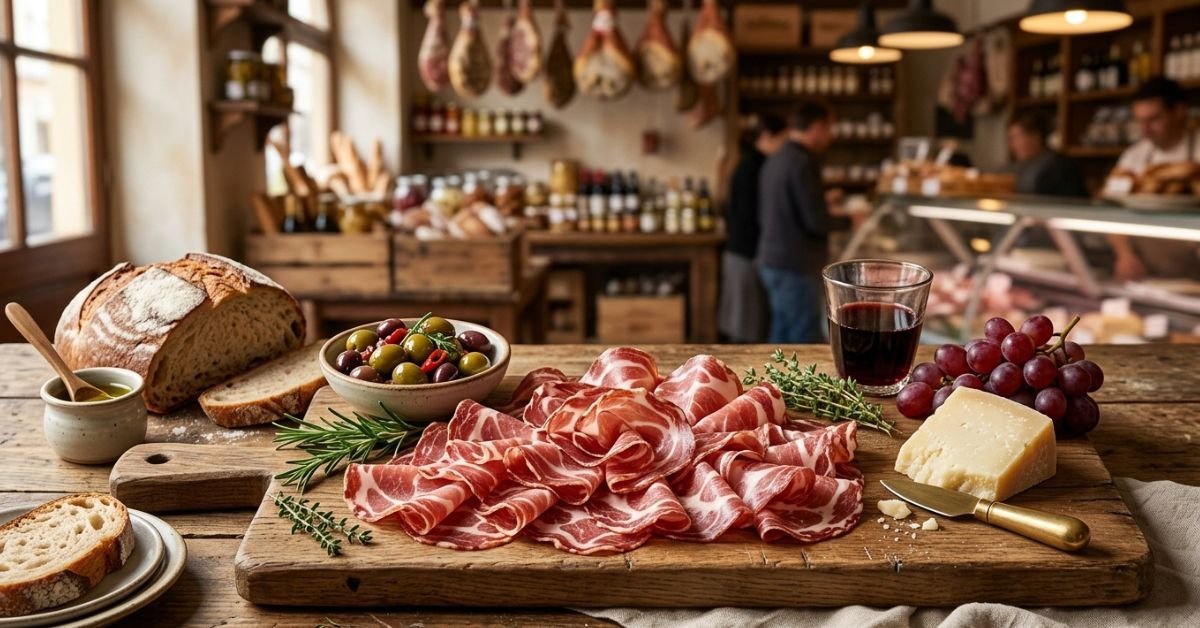
Capocollo (also known as coppa, capicola, or affectionately “gabagool” in American-Italian circles) is a whole-muscle dry-cured pork cut from the neck and upper shoulder. It’s not as famous as prosciutto, but many who try it properly end up preferring its richer flavor and softer texture.
In 2026, with charcuterie boards still dominating home entertaining and interest in authentic Italian ingredients at an all-time high, this guide covers everything: origins, production, regional variations, flavor profiles, pairings, and how to buy the good stuff.
What Exactly Is Capocollo?
Capocollo comes from the muscle running along the pig’s neck to the fourth or fifth rib. “Capo” means head, “collo” means neck the name literally describes the cut.
It’s a whole-muscle salume, dry-cured and aged, then sliced paper-thin. The result features beautiful marbling that melts in your mouth, unlike leaner hams. It’s similar to prosciutto in use but offers a more tender bite and complex seasoning.
A Quick History
This delicacy traces back to Italian farming traditions, where nothing from the pig went to waste. Farmers cured the prized neck muscle with salt, pepper, and local spices to preserve it through seasons. Versions appear across regions from Emilia-Romagna (often milder, called coppa) to Calabria (spicier).
It even has Sopranos-level cultural cachet in the U.S., where “gabagool” became shorthand for Italian-American deli culture. Today, both traditional European DOP-protected versions and excellent domestic producers thrive.
How Capocollo Is Made
The process rewards patience:
- Selection: High-quality pork neck/collar (the “money muscle”).
- Trimming & Seasoning: Meat is trimmed, rubbed with salt (and curing salt), black pepper, and regional spices. Some versions use wine, garlic, or chili.
- Curing: Dry-cured for weeks, allowing flavors to penetrate.
- Aging: Hung in controlled conditions for 3–6+ months. Weight loss reaches 30-50%, concentrating flavor.
- Finish: Sometimes coated in more spices or encased.
Regional twists shine here. Capocollo di Calabria often includes hot peppers for a fiery kick. Northern styles stay milder with black pepper or wine.
Pro Tip from Experience: After tasting dozens of versions over the years, the magic is in the fat marbling and slow aging. Cheap versions often taste one-dimensional or overly salty.
Mild vs Hot Capocollo: Key Differences
| Aspect | Mild Capocollo/Coppa | Hot Capocollo/Capicola |
|---|---|---|
| Spice Level | Black pepper, subtle herbs | Red pepper flakes, paprika, chili |
| Flavor Profile | Sweet, savory, balanced | Fiery, bold, aromatic |
| Best For | Cheese boards, delicate pairings | Sandwiches, pizza, bold antipasti |
| Regional Bias | Northern Italy (e.g., Piacenza) | Southern Italy (e.g., Calabria) |
| Heat | Gentle warmth | Noticeable kick |
Many producers offer both. Start mild if you’re new; hot if you love spice.
How to Enjoy Capocollo
Its versatility makes it a staple:
- Charcuterie Boards: Fold or roll slices. Pairs beautifully with aged cheeses, figs, olives, and nuts.
- Sandwiches: The star of Italian subs, hoagies, or muffulettas. Hot capocollo elevates a simple ham and cheese.
- Cooking: Dice into pasta carbonara-style dishes, pizza toppings, or antipasti salads. Lightly crisp in a pan for added texture.
- Wine Pairings: Light reds (Chianti, Barbera), crisp whites (Pinot Grigio), or even orange wines. Avoid anything too tannic.
Myth vs Fact
- Myth: All capocollo is super spicy. Fact: Mild versions dominate in many regions heat is optional.
- Myth: It’s basically fancy ham. Fact: Different cut, dry-cured not brined, richer marbling, and distinct seasoning.
- Myth: It’s hard to find good versions outside Italy. Fact: Excellent U.S. and Canadian producers (Boar’s Head, Volpi, smaller artisans) deliver quality.
Buying Guide for 2026
Look for:
- Clear marbling and deep red color.
- Natural casing where possible.
- DOP/IGP for authentic Italian (e.g., Coppa Piacentina, Capocollo di Calabria).
- Domestic standouts: Well-aged options from artisan makers emphasizing heritage breeds.
Recent trends favor sustainable sourcing and no-added-nitrates versions. Slice it fresh at the deli for best texture.
FAQs
Is capocollo the same as coppa?
Essentially yes. “Coppa” is the common northern Italian name, while “capocollo” or “capicola” is used more in southern regions and North America. They refer to the same cured pork neck cut.
What does capocollo taste like?
Tender with a sweet-savory depth from the marbled fat, plus whatever spices the region adds. Mild versions feel elegant; hot ones bring pleasant heat that builds.
Is capocollo healthy?
Like most cured meats, it’s best in moderation. It offers protein and healthy fats from the pork, but it’s high in sodium. Opt for quality versions with clean ingredients.
How do you store capocollo?
Keep whole pieces wrapped in the fridge for weeks. Once sliced, use within a few days or freeze for longer storage. Bring to room temperature before serving for best flavor.
Can you make capocollo at home?
Yes, with proper curing salt, temperature control (around 55°F/13°C), and humidity. Home charcuterie enthusiasts successfully age it in 3–6 months. Start with a good recipe and hygrometer.
What’s the difference between capocollo and prosciutto?
Prosciutto comes from the hind leg (ham), is usually milder, and leaner. Capocollo is from the neck, has more marbling, and often bolder seasoning.
CONCLUSION
Capocollo brings together heritage, craftsmanship, and incredible flavor in one beautifully marbled package. From traditional Italian DOP versions to excellent modern producers, it delivers that perfect mix of tenderness, fat, and spice that makes Italian charcuterie legendary.
CLICK HERE FOR MORE BLOG POSTS

Noah is a passionate content writer at Saxby, known for creating engaging and informative articles across a variety of topics. With a keen eye for detail and a reader-focused approach, he delivers high-quality content that blends clarity, research, and practical insights. Noah consistently aims to provide value-driven content that resonates with a global audience.