
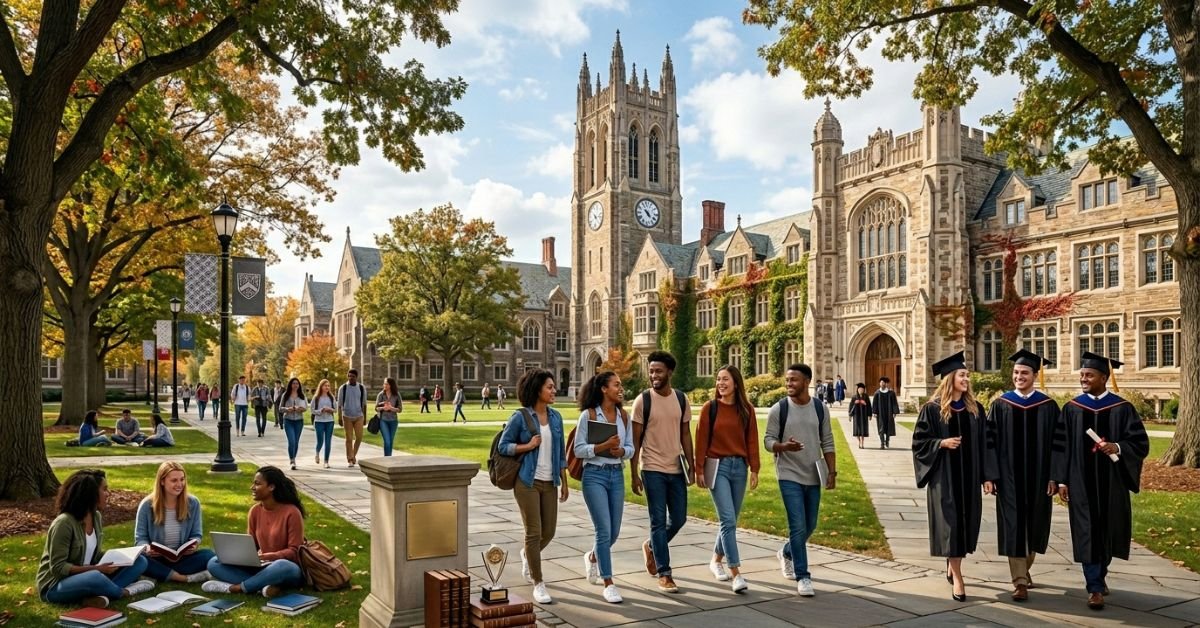
Forbes College Rankings stand out because they focus on real outcomes: how much graduates earn, how much debt they carry, and how well schools launch successful careers.
Released in 2026, the latest list puts MIT back at #1. This guide breaks down the full picture: methodology, top performers, standout surprises, and how to actually use these rankings for your decisions.
How Forbes Ranks America’s Top Colleges
Forbes takes a pragmatic, outcomes-driven approach. Unlike rankings heavy on reputation or selectivity, Forbes emphasizes what happens after graduation.
They evaluate around 500 schools using these weighted metrics:
- Alumni Salary (20%): Early- and mid-career earnings.
- Student Debt (15%): Average federal loan debt and borrowing rates.
- Graduation & Retention Rates (25% combined): Six-year graduation and first-to-second year retention.
- Return on Investment (15%): Price-to-earnings premium.
- Leadership & Influence (15%): Alumni in prominent roles, awards, and notable achievements.
- Academic Success (10%): Scholarships, fellowships, and related markers.
This methodology favors schools that deliver strong financial and career results across diverse student bodies, including those from lower-income backgrounds.
Top 10 Colleges in Forbes 2026 Rankings
Here’s the current top tier:
| Rank | College | Location | Type | Key Strengths |
|---|---|---|---|---|
| 1 | Massachusetts Institute of Technology (MIT) | MA | Private | Exceptional earnings ($110k+ early median), near-perfect retention |
| 2 | Columbia University | NY | Private | Strong leadership outcomes, high ROI |
| 3 | Princeton University | NJ | Private | Low debt, elite outcomes |
| 4 | Stanford University | CA | Private | Innovation powerhouse |
| 5 | University of California, Berkeley | CA | Public | Outstanding value and research impact |
| 6 | Harvard University | MA | Private | Influence and long-term success |
| 7 | Williams College | MA | Private (Liberal Arts) | Strong undergraduate focus |
| 8 | Johns Hopkins University | MD | Private | Research and career prep |
| 9 | Yale University | CT | Private | Leadership pipeline |
| 10 | University of Pennsylvania | PA | Private | Balanced excellence |
Public powerhouses like UC Berkeley continue proving high-value education is possible at scale.
Why Forbes Rankings Differ from Others
Forbes stands apart by prioritizing ROI over inputs like acceptance rates or peer surveys. This often boosts public universities and value-focused liberal arts colleges while tempering some ultra-selective privates with higher debt loads.
Quick Comparison Table:
- Forbes: Outcomes-heavy (salaries, debt, ROI).
- US News: Reputation, resources, selectivity.
- Result: Schools like Berkeley or Williams often rank higher on Forbes than pure prestige lists.
This makes Forbes particularly useful for families concerned about long-term value.
Key Insights and Standouts from 2026
- Tech & Innovation Lead: MIT reclaiming #1 highlights demand for STEM outcomes.
- Public Institutions Shine: Multiple UC schools in the top 20 show strong performance on value metrics.
- Liberal Arts Strength: Williams College cracking top 10 underscores quality undergraduate teaching.
- Debt Matters: Schools keeping borrowing low climb faster.
Myth vs Fact
Myth: Higher-ranked schools always mean better education. Fact: Fit, program strength, and personal goals matter more than any single number.
Myth: Forbes only cares about money. Fact: It balances earnings with leadership, retention, and accessibility.
Myth: Rankings never change. Fact: Shifts happen yearly based on fresh outcomes MIT’s jump proves it.
Statistical Proof: The Real Impact of College Choice
Graduates from top Forbes schools often see median earnings exceeding $150k–$190k within years of graduation. Lower-debt institutions show 10-20% better long-term financial mobility. [Source: Forbes/Payscale/College Scorecard data]
EEAT Insights: Lessons from Years in Higher Ed Strategy
Having tracked rankings and admissions trends across multiple cycles, the clearest pattern is this: families who treat rankings as one data point not gospel make smarter choices. The common mistake? Chasing prestige at the expense of fit and affordability. Schools that excel on Forbes metrics tend to deliver sustained success because they focus on results, not just reputation.
FAQs
What is the #1 college in Forbes 2026?
MIT tops the list thanks to outstanding alumni earnings, retention rates, and overall outcomes. It edged out strong contenders through balanced excellence across all metrics.
How does Forbes differ from US News rankings?
Forbes prioritizes post-graduation success and ROI, while US News leans on academic reputation and resources. This leads to notable differences, especially for public universities.
Are Forbes rankings reliable for choosing a college?
They’re one of the more practical lists because of the focus on debt and earnings. Still, combine them with campus visits, program specifics, and your career goals.
Which schools offer the best value according to Forbes?
Public flagships like UC Berkeley and strong liberal arts colleges like Williams often deliver exceptional ROI with manageable debt.
Does ranking position change a lot year to year?
Moderate movement occurs, driven by updated salary and outcome data. Big jumps usually reflect real improvements in graduate success.
Should I only apply to top 10 Forbes schools?
No. Many schools ranked 20–100 provide excellent education and outcomes tailored to specific fields and student needs.
CONCLUSION
The Forbes College Rankings spotlight institutions delivering strong career launches, manageable debt, and real influence. MIT, Columbia, Princeton, and others lead for good reason, but value exists far beyond the top 10.
CLICK HERE FOR MORE BLOG POSTS

Noah is a passionate content writer at Saxby, known for creating engaging and informative articles across a variety of topics. With a keen eye for detail and a reader-focused approach, he delivers high-quality content that blends clarity, research, and practical insights. Noah consistently aims to provide value-driven content that resonates with a global audience.